
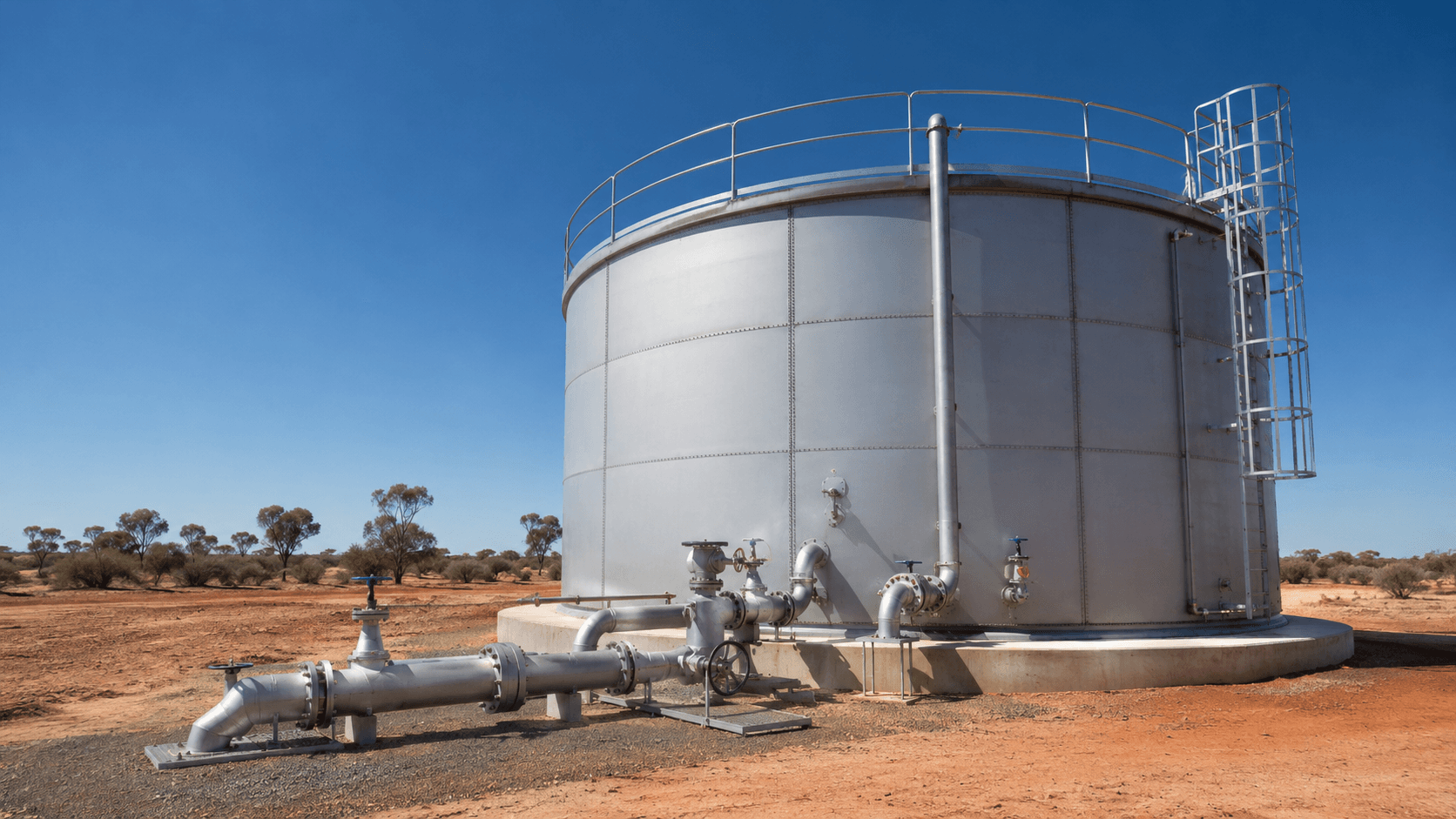
It seems unlikely that a water tank could collapse under vacuum — water is heavy, tanks are strong, and the failure mode does not intuitively suggest itself the way a leak or a corrosion hole does. But roof and shell buckling from vacuum, or deformation from overpressure, is a real and well-documented failure mode, and pressure and vacuum relief valves exist specifically to prevent it.
As a tank is filled, air inside the vapour space above the water is displaced and must be able to vent out. As a tank is drained, air must be able to enter to replace the volume of water leaving. If the tank cannot breathe adequately during these normal fill and draw cycles, pressure or vacuum builds inside the tank — and tank roofs, particularly lightweight or cone-roof designs, are typically engineered for very small pressure differentials, not for being sealed against a rapid draw-down event.
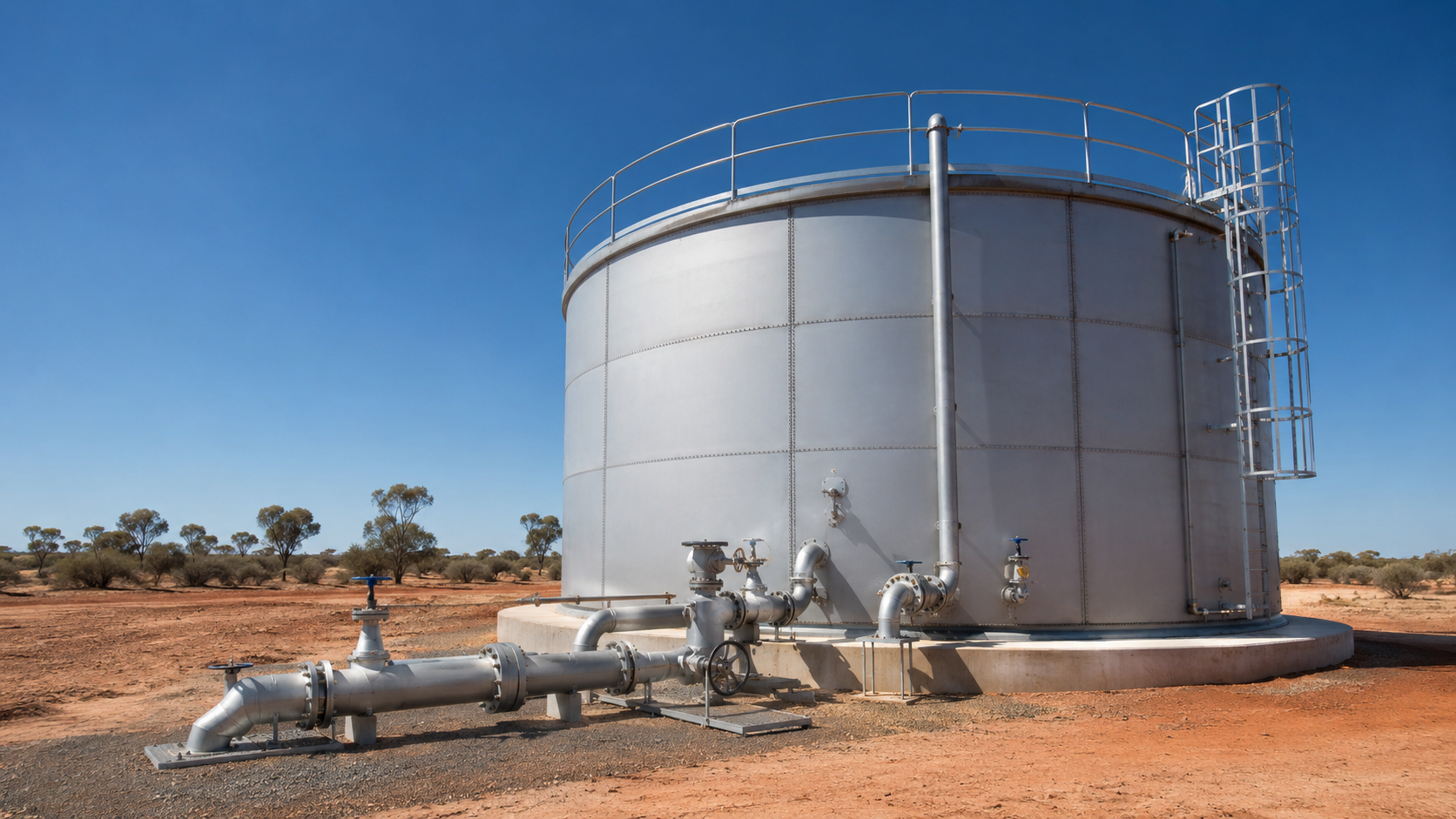
Vacuum collapse during rapid draw-down
If a tank is drawn down quickly — a large pump demand, a firefighting draw, or a valve opened without adequate venting capacity available — and the venting cannot admit air fast enough to replace the departing water volume, the resulting vacuum can pull the roof inward. Lightweight cone or dome roofs are particularly vulnerable, since they are typically not designed to resist significant negative pressure from the inside.
Overpressure during rapid filling
The reverse scenario occurs during rapid filling if vented air cannot escape fast enough, building positive pressure in the vapour space that can deform or, in extreme cases, rupture the roof-to-shell seam — often the structurally weakest connection in the tank, sometimes deliberately designed as a frangible joint specifically to fail before the shell itself does in an extreme event.
Sizing has to match actual fill and draw rates
Relief valve or open vent capacity needs to be sized against the maximum realistic fill rate and draw-down rate the tank will experience — not just average operating conditions. A tank with a pump capable of a very high draw rate needs venting sized for that draw rate, even if it only occurs occasionally, because the failure mode occurs during the extreme event, not during typical operation.
Valves need to actually work when called on
A pressure and vacuum relief valve that has corroded, become blocked with insects, debris or ice, or has a stuck mechanism from lack of use provides no protection despite being physically present on the tank. Routine inspection needs to confirm the valve is free to operate, not just that it is installed — a common gap, since these fittings can sit unused for long periods between the rare events that actually call on them.
Pressure and vacuum relief valves protect against a failure mode that, precisely because it is rare, is also the one most likely to be forgotten during routine maintenance — until the one draw-down event that actually needs it finds it blocked.
| Check | Why it matters |
|---|---|
| Venting capacity matches maximum fill and draw rates | Average-condition sizing leaves the tank exposed during extreme events |
| Valve free of corrosion, debris or ice blockage | A present but non-functional valve provides no actual protection |
| Roof design pressure rating confirmed against site duty | Lightweight roofs tolerate very little pressure differential |
| Routine functional check, not just visual inspection | Confirms the valve actually operates, not just that it is installed |
Can a water tank roof really collapse from vacuum?
Yes. Lightweight cone or dome roofs are typically designed for very small pressure differentials. If a tank is drawn down faster than its venting can admit replacement air, the resulting vacuum can pull the roof inward — a documented and real failure mode, not a theoretical one.
How often should pressure and vacuum relief valves be checked?
They should be included in routine tank inspection and maintenance cycles, with a functional check — not just a visual check — to confirm the valve is free to operate. Because these events are rare, blockage or corrosion can go unnoticed for a long time without deliberate testing.
Does every tank need a pressure and vacuum relief valve?
Most enclosed tanks with a roof need adequate venting, whether through open vents or dedicated pressure and vacuum relief valves, sized to the tank's actual fill and draw rate requirements. The specific fitting and sizing depend on tank design and operating conditions.
Reviewing venting adequacy on an existing tank, or specifying it for a new one? PC Water Infrastructure can assess and correctly size tank venting.
Discuss Tank Venting