
For decades, inspecting the inside of a water tank meant draining it, or sending a diver in. Today an ROV can cover the same ground without taking the asset offline — but that does not make manned entry obsolete. The right choice depends on what you actually need to find out.
Asset owners increasingly ask for ROV inspection by default, assuming it is simply the modern replacement for manned entry. It is not a replacement — it is a different tool with different strengths. Knowing when each one is the right call saves money and, more importantly, gets you an inspection that actually answers the question you are asking.
Inspecting a live, in-service tank
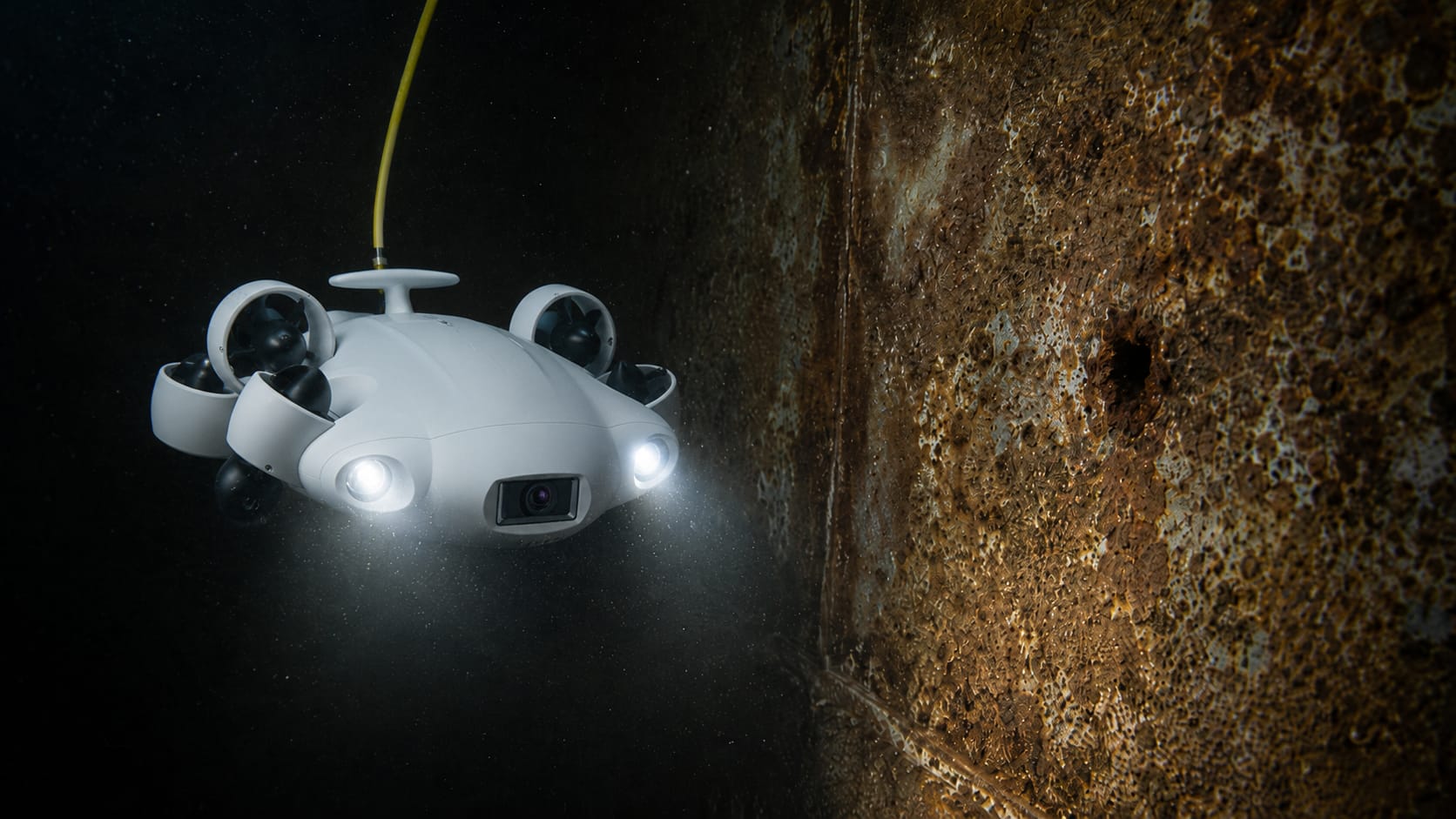
An ROV goes in through the access hatch while the tank stays full and connected to the network. There is no outage, no lost storage capacity, and no disruption to supply — the single biggest reason ROV inspection has become the default first step for potable and fire water tanks that cannot be taken offline without a service impact.
Covering large or complex assets efficiently
A remotely operated vehicle with HD camera and lighting can systematically cover a large reservoir floor, walls and roofline faster than a diver working on limited bottom time, and it records continuous video evidence rather than a verbal report after the fact.
Working in conditions unsuitable for a diver
Confined access, low headroom, contaminated or chemically treated water, and tanks with internal obstructions can all rule out manned entry on safety grounds. An ROV extends inspection into assets a diver simply should not enter.
Video tells you what something looks like. It does not tell you how it feels, sounds, or measures under a probe. Where an inspection needs hands-on assessment — sounding a plate for hidden thinning, taking an ultrasonic thickness reading at a specific point, physically testing a weld or a liner seam, or recovering a sample — a trained diver or confined-space entrant working to a documented method is still the right tool. Manned entry is also usually required once a tank is already drained for maintenance, where there is no outage cost left to avoid.
ROV and manned entry are not competing methods — they are sequential ones. The ROV tells you where to look closely; manned entry, where it is needed, tells you exactly what is happening there.
| Situation | Better fit |
|---|---|
| Tank must stay in service, no outage available | ROV inspection |
| Routine condition survey, large asset | ROV inspection |
| Suspected localised pitting needs thickness testing | Manned or confined-space entry |
| Tank already drained for maintenance | Manned entry |
| Liner seam or weld needs a physical test | Manned entry |
| Water quality or access unsafe for a diver | ROV inspection |
Is an ROV inspection as accurate as a diver going in?
For visual condition assessment — corrosion, coating failure, sediment, structural damage — a good ROV inspection with HD video is highly reliable and gives a permanent record. Where hands-on measurement is needed, such as ultrasonic thickness testing at a specific point, manned or confined-space entry is still the more accurate method.
Can an ROV inspect a fire water tank without affecting compliance cover?
Yes — that is one of the main reasons ROV inspection is used for fire tanks. It allows the tank's condition to be assessed and documented without draining it, so the required firefighting water volume stays available throughout the inspection.
Do I need to choose one method or the other?
Not necessarily. Many asset owners use ROV inspection as the routine, low-disruption survey, and only call for manned or confined-space entry when the ROV footage flags something that needs a hands-on measurement or physical test.
Not sure which inspection method fits your tank, your schedule and your compliance obligations? Our engineers can recommend the right approach before you commit to either.
Discuss your inspection options