
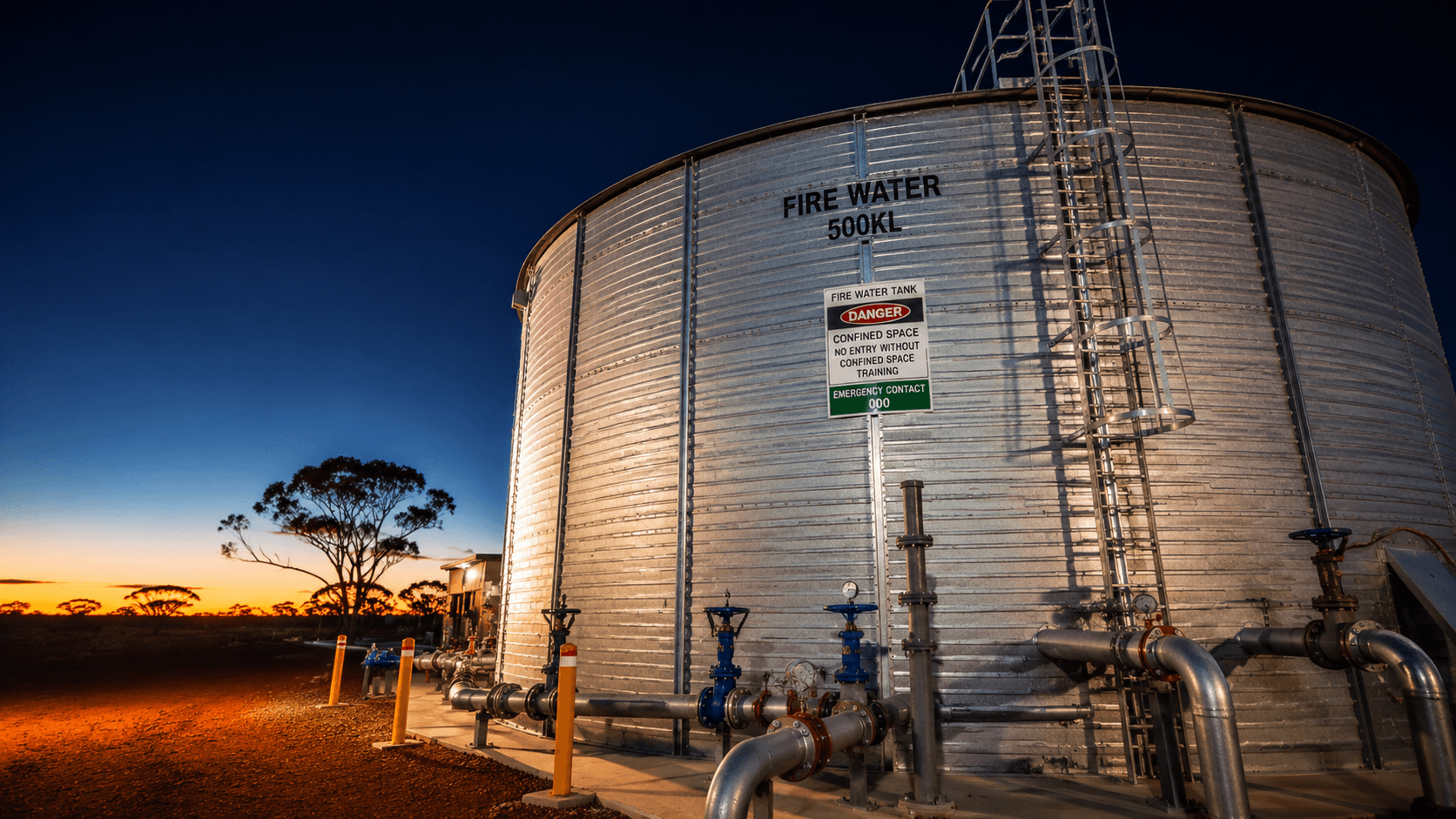
A fire water tank's nameplate capacity and its usable firefighting volume are not the same number — and the gap between them is exactly where compliance failures hide. A tank can be structurally sound, full, and still not deliver the volume a fire system was designed around.
AS2419 (fire hydrant systems) and the fire engineering behind a site's water supply are built on a specific usable volume, drawn from a specific point in the tank, through a suction arrangement sized to deliver it at the required rate. Any one of those three elements being wrong makes the tank's total capacity partly irrelevant to what the fire system can actually access.
Why the numbers differ
A tank's nameplate or as-built volume includes water below the level a pump can practically draw from, and often a nominal freeboard allowance at the top. The usable firefighting volume is what is actually available between the pump's minimum suction level and the tank's normal operating level — routinely less than the headline capacity, sometimes significantly so on tanks with a high or poorly positioned suction point.
Sediment eats into usable volume quietly
Sediment accumulation on the tank floor raises the effective floor level without changing the tank's nameplate capacity, silently reducing usable volume year on year. A tank that was correctly sized when commissioned can fall short of its required draw-down purely through years of undetected sediment build-up.
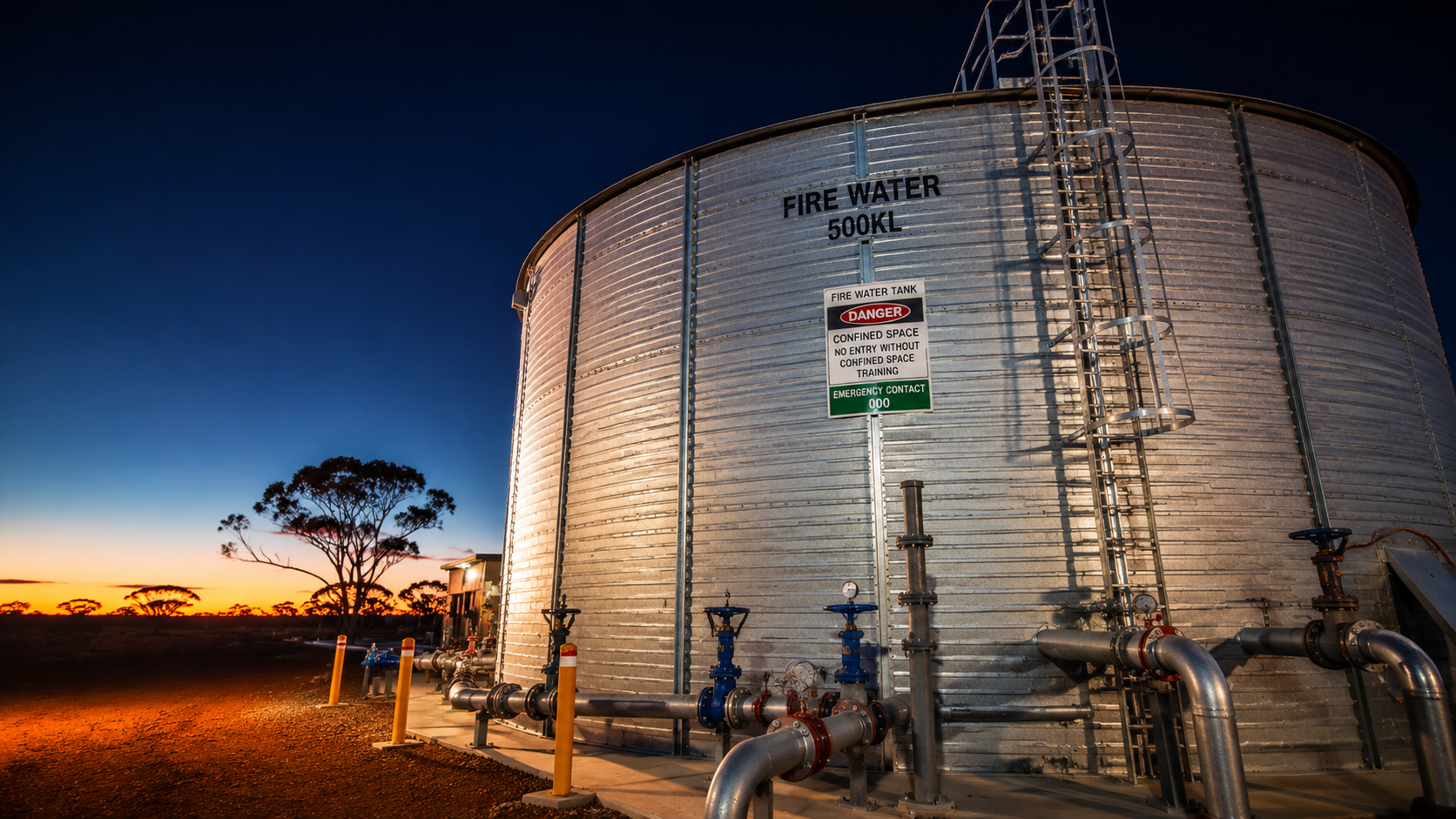
Pump suction needs a minimum submergence to draw water without entraining air, and a clear path free of sediment or debris around the suction point. A correctly calculated usable volume is only deliverable if the suction arrangement can actually access it at the required flow rate — an undersized or poorly positioned suction line can effectively strand volume the calculation assumed was available.
A fire tank is not being asked "how much water do you hold." It is being asked "how much water can you deliver, from where, at what rate, when it matters." Those are different questions with different answers.
| Check | Why it matters |
|---|---|
| Usable volume versus nameplate/as-built volume | The compliance figure is usable volume, not total capacity |
| Sediment depth at the suction point | Reduces effective floor level and usable draw-down over time |
| Suction line submergence and positioning | Insufficient submergence risks air entrainment under draw |
| Design flow rate versus suction capacity | Volume is only useful if it can be delivered at the required rate |
| Baseline records against current condition | Confirms whether the as-commissioned figures still hold |
Why is my fire tank's usable volume less than its total capacity?
Usable volume is measured between the pump's minimum suction level and normal operating level, which excludes the water below suction reach and any freeboard allowance. Sediment build-up on the floor also reduces usable volume over time without changing the tank's nameplate capacity.
How do I know if sediment is affecting my fire tank's compliance?
A condition inspection that measures sediment depth against the suction point's position is the reliable way to check. Sediment accumulation is gradual and not visible from outside the tank, which is why it is one of the more commonly missed causes of a fire tank falling short of its designed draw-down volume.
Is fire tank volume checked as part of a standard AS1851 service?
Routine AS1851 servicing typically confirms the tank is at its operating level, but a full usable-volume and draw-down review — including sediment depth at the suction point — is a more detailed assessment that should be scheduled periodically, particularly for tanks that have not had one since commissioning.
Not certain your fire tank can actually deliver its designed draw-down volume? A condition and draw-down review will confirm it.
Request a fire tank review