
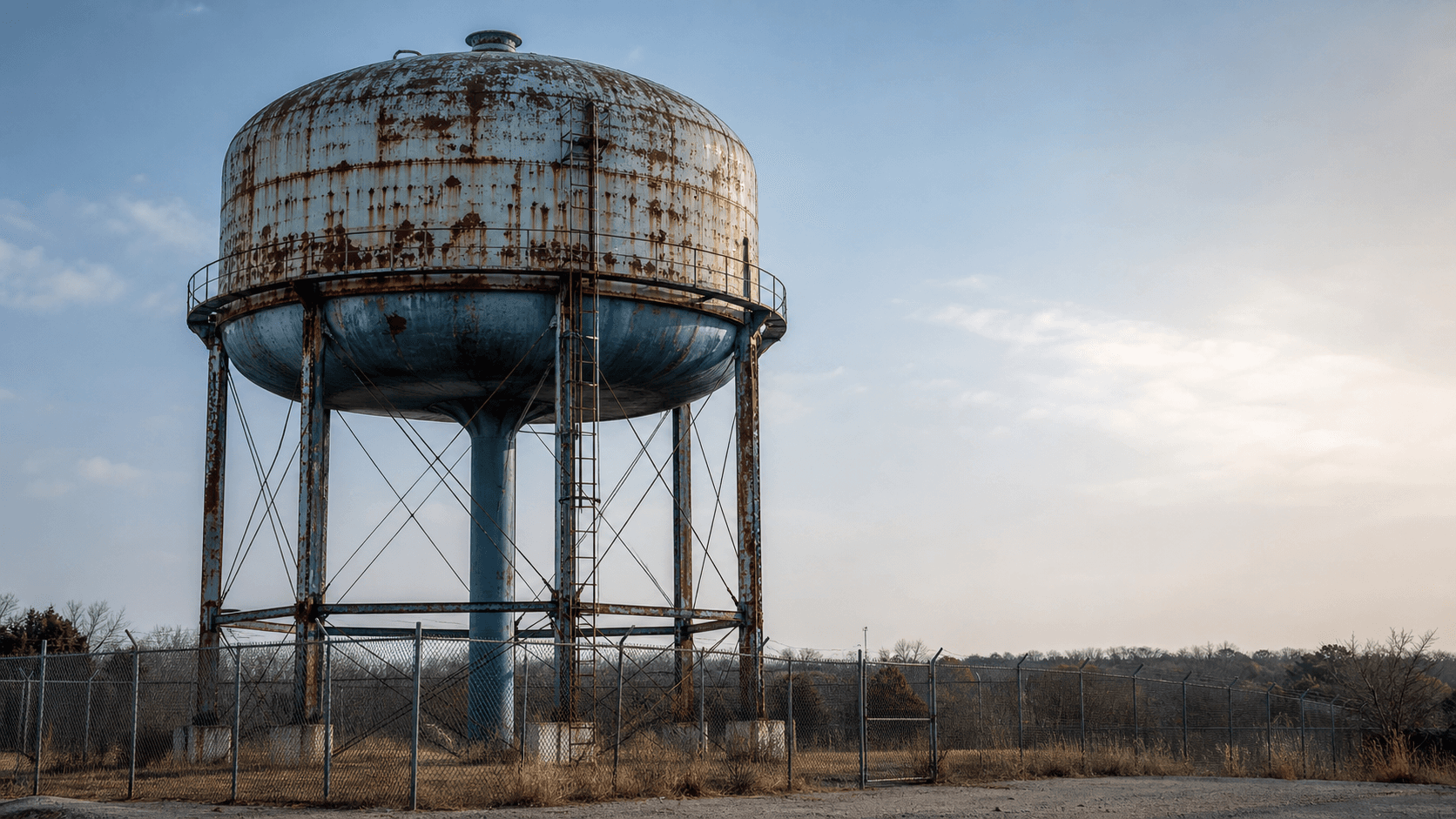
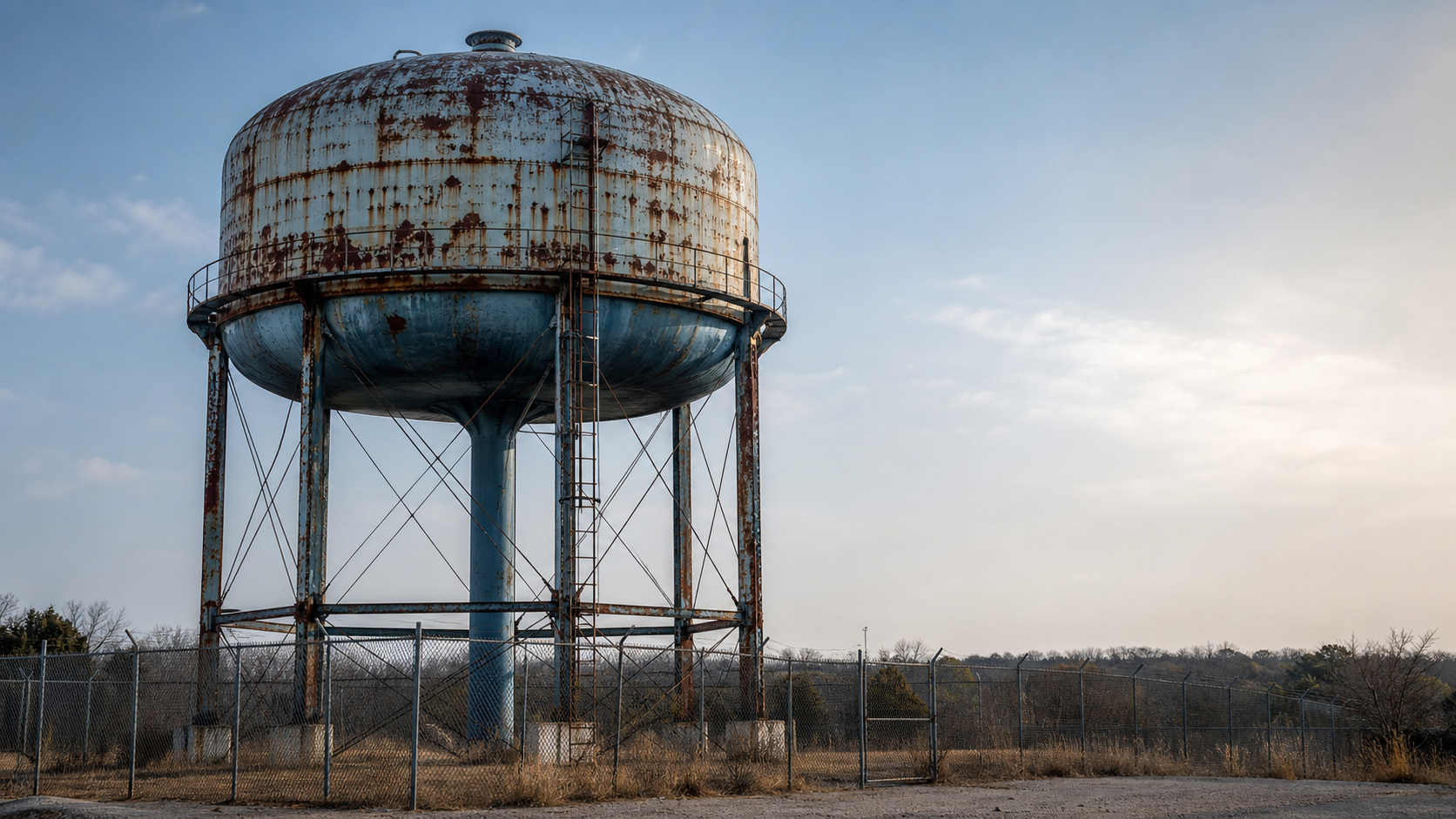
A water tank looks benign compared to a chemical vessel or a sewer — which is exactly why confined space requirements are sometimes treated as a formality rather than the safety-critical process they are. An emptied or partially drained tank meets the legal and practical definition of a confined space, with all the same risks.
Restricted entry and exit
A tank accessed through a single hatch, with no alternative exit route, meets the core definition used across Australian work health and safety regulation — an enclosed or partially enclosed space not designed for continuous occupancy, with limited means of entry and exit.
Atmospheric risk is real, not theoretical
Decomposing organic matter, biofilm, or residual disinfection chemicals can deplete oxygen or generate hazardous gases inside a tank that has been closed up. A tank that looks clean and empty is not the same as a tank confirmed safe to breathe in — that confirmation only comes from atmospheric testing before entry.
Permit-to-work and atmospheric testing
Entry should not proceed without a documented permit and atmospheric testing for oxygen level and hazardous gases, repeated periodically for the duration of the work — not tested once at the hatch and assumed constant.
Ventilation and continuous monitoring
Forced ventilation and continuous gas monitoring during occupied work reduce the risk of atmospheric conditions changing while someone is inside — a real risk in a tank being actively cleaned or where sediment is disturbed.
Standby person and rescue plan
A dedicated standby person outside the space, and a documented, practiced rescue plan, are not optional additions — they are the difference between an incident being a near miss and being fatal. Rescue cannot be improvised after entry has already begun.

The controls exist because the risk is real, not because the paperwork demands it. A permit, a gas test and a standby person are the difference between a routine task and a fatality statistic — and that gap has been proven in incident reports, not just in theory.
| Requirement | Why it is not optional |
|---|---|
| Documented confined space entry permit | Establishes accountability and confirms controls are in place before entry |
| Atmospheric testing before and during entry | A tank that looks safe is not confirmed safe without testing |
| Forced ventilation where required | Reduces the chance of hazardous atmosphere developing during work |
| Trained standby person stationed outside | The only reliable way to trigger an effective rescue response |
| Practiced, documented rescue plan | Rescue cannot be improvised safely once an incident has occurred |
Is a water tank always classified as a confined space?
Most water tanks meet the definition once someone needs to physically enter them — restricted entry/exit and the potential for a hazardous atmosphere are the defining features, and both are commonly present in water storage tanks regardless of how clean they appear.
Can atmospheric testing be skipped if the tank was recently opened and looks fine?
No. Visual appearance does not indicate oxygen level or the presence of hazardous gases. Atmospheric testing is a specific, instrument-based check that cannot be substituted with a visual assessment, regardless of how the tank looks or smells.
Does ROV inspection eliminate the need for confined space entry procedures?
For inspection tasks that can be completed by ROV, yes — it avoids the confined space risk entirely, which is one of its major safety advantages. Any task that still requires a person to physically enter the tank remains subject to full confined space entry requirements.
Planning tank entry work? Confirming the right controls are in place before anyone goes near the hatch is the job that matters most.
Talk to our safety-qualified team