

Specifying a coating system by brand name, without understanding the underlying chemistry, is how the wrong product ends up on the wrong tank. Epoxy, polyurethane and zinc-rich primer systems each protect steel differently, and each is genuinely better suited to different service conditions.
Epoxy coatings
Epoxies form a dense, chemically resistant film with strong adhesion to properly prepared steel, making them a common choice for potable water tank interiors where chemical resistance and a smooth, cleanable surface matter. Their main limitation is UV stability — epoxies chalk and degrade under prolonged sun exposure, which is why they are typically used internally or paired with a UV-stable topcoat externally.
Polyurethane coatings
Polyurethanes offer strong UV resistance and gloss retention, making them a common external topcoat choice, often applied over an epoxy or zinc-rich primer system to combine chemical resistance underneath with weathering performance on the surface. Polyurethane alone over bare steel, without a compatible primer, does not deliver the same corrosion protection as a full system.
Zinc-rich primers
Zinc-rich primers work differently to barrier coatings like epoxy and polyurethane — the zinc provides a degree of galvanic (sacrificial) protection to the steel beneath, similar in principle to cathodic protection, in addition to the physical barrier the film provides. This makes them particularly effective at protecting against corrosion creeping from scratches or damage in the coating film, a common failure point for barrier-only systems.
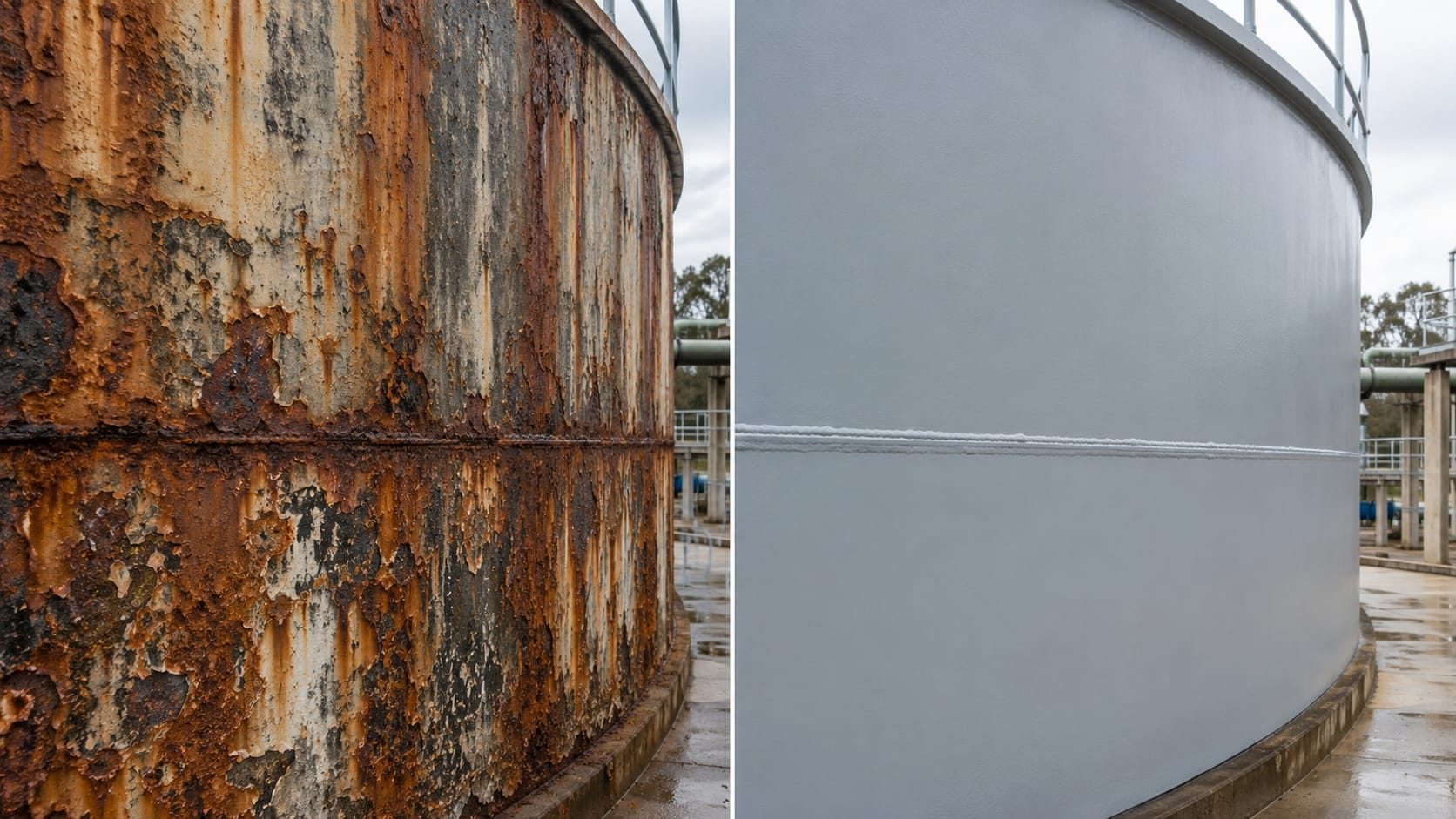
A common specification error is choosing a high-performance topcoat while under-specifying the primer, or vice versa — the two layers need to be compatible and each doing the job it is suited to. A zinc-rich primer providing galvanic protection at scratches, with an epoxy intermediate coat for chemical resistance, and a polyurethane topcoat for UV and weathering, is a genuinely different (and generally more durable) system than any one of those products used alone.
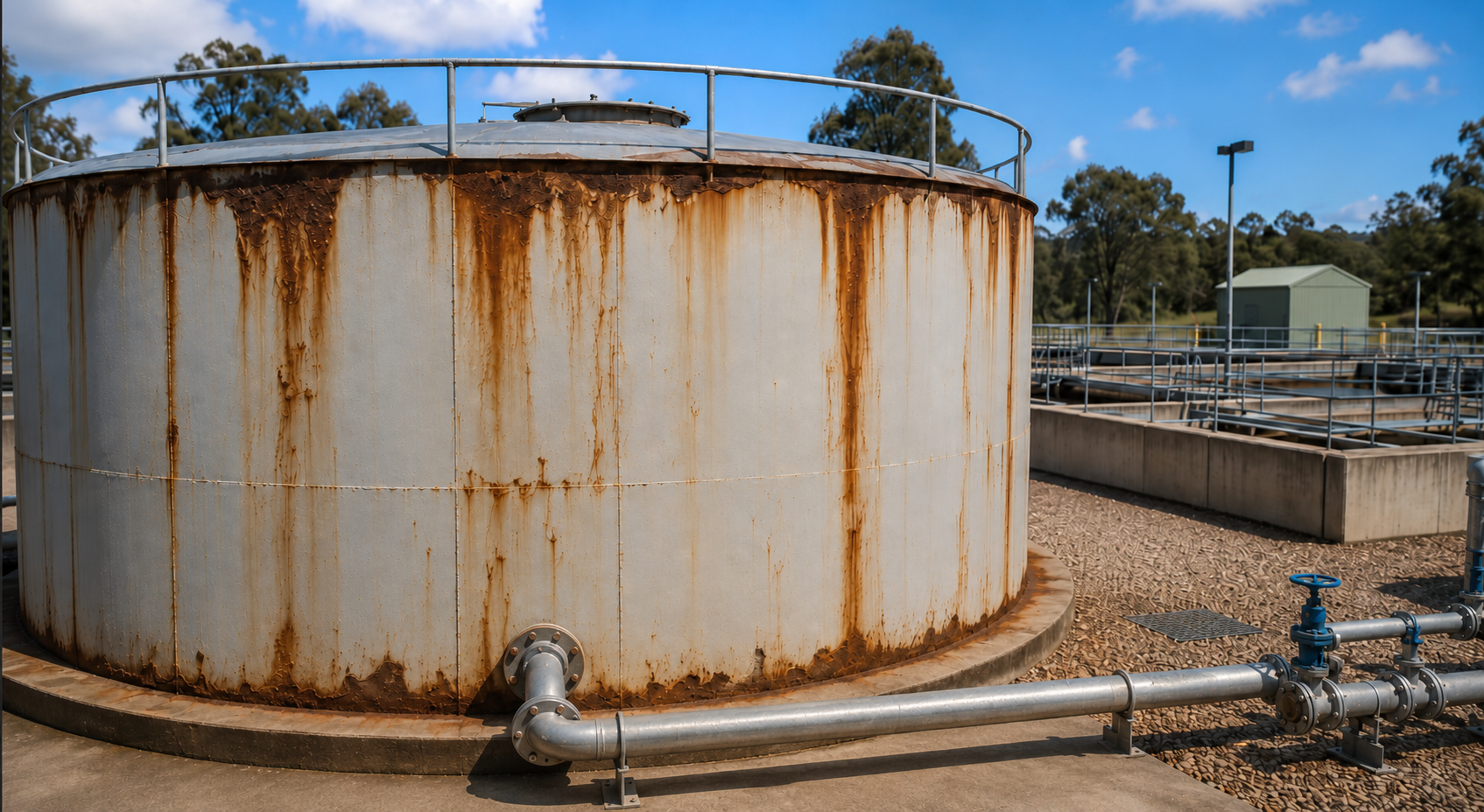
Asking "which coating is best" is the wrong question. The right question is which combination of primer, intermediate and topcoat suits this tank's exposure, chemical environment and maintenance access — because the system, not any single product, determines how long the protection actually lasts.
| Condition | Relevant consideration |
|---|---|
| Potable water contact surface | Requires AS4020-certified coating suitable for drinking water contact |
| External surface with high UV exposure | Polyurethane topcoat for gloss and UV retention |
| High mechanical damage risk (fittings, walkways) | Zinc-rich primer for galvanic protection at scratches |
| Aggressive internal chemical exposure | Epoxy intermediate coat for chemical resistance |
| Limited future recoat access | Favour a more durable, higher-build system upfront |
Is epoxy or polyurethane the better coating for a water tank?
They are usually not competing choices — epoxy is common for internal, chemically resistant surfaces, while polyurethane is common as an external, UV-stable topcoat, often over an epoxy or zinc-rich primer. Which is appropriate depends on where on the tank the coating is being applied and what it needs to resist.
What does a zinc-rich primer actually protect against that other coatings don't?
It provides galvanic (sacrificial) protection at points where the coating film is scratched or damaged, continuing to protect the exposed steel even where the barrier itself has failed locally. Barrier coatings like plain epoxy or polyurethane do not offer this protection once the film is breached.
Can I mix coating brands across the primer, intermediate and topcoat layers?
Compatibility between layers matters more than brand consistency, but manufacturers generally test and warrant their own multi-coat systems as a set. Mixing brands without confirming chemical compatibility risks adhesion failure between coats, so this should be checked before specification.
Specifying or reviewing a coating system for a water tank? Getting the right combination of primer, intermediate and topcoat matters more than any single product choice.
Discuss your coating specification