
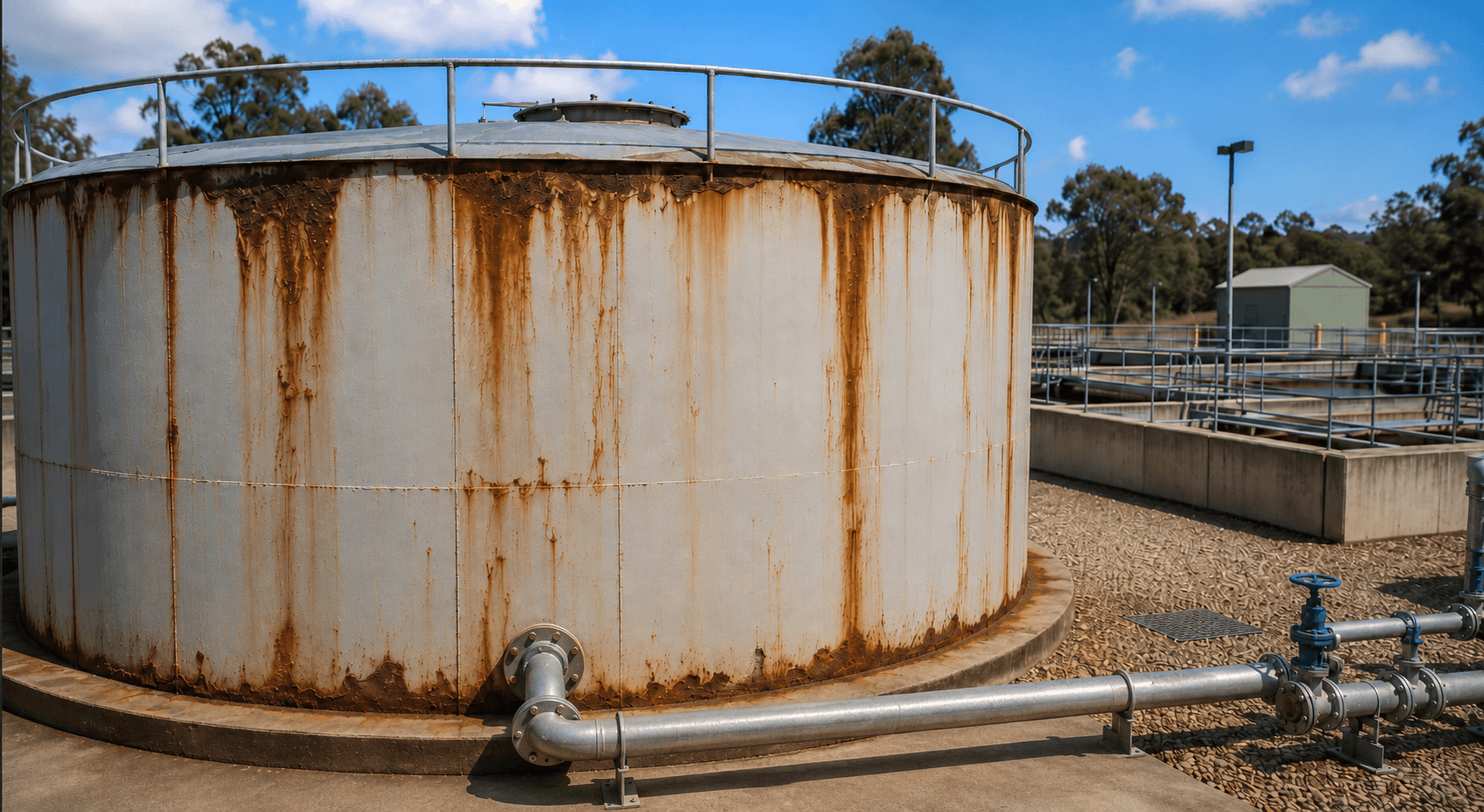
A coating physically separates steel from water. Cathodic protection works differently — it manipulates the electrochemistry of the steel surface so corrosion current is directed away from the structure being protected, even at coating defects a paint system alone cannot cover.
Both major cathodic protection methods rely on the same underlying principle: steel corrodes because of electrochemical activity at its surface, and if that activity can be counteracted by supplying electrons from elsewhere, the steel itself stops being consumed. Sacrificial anode systems and impressed current systems achieve this in different ways, with different equipment, cost and monitoring implications.
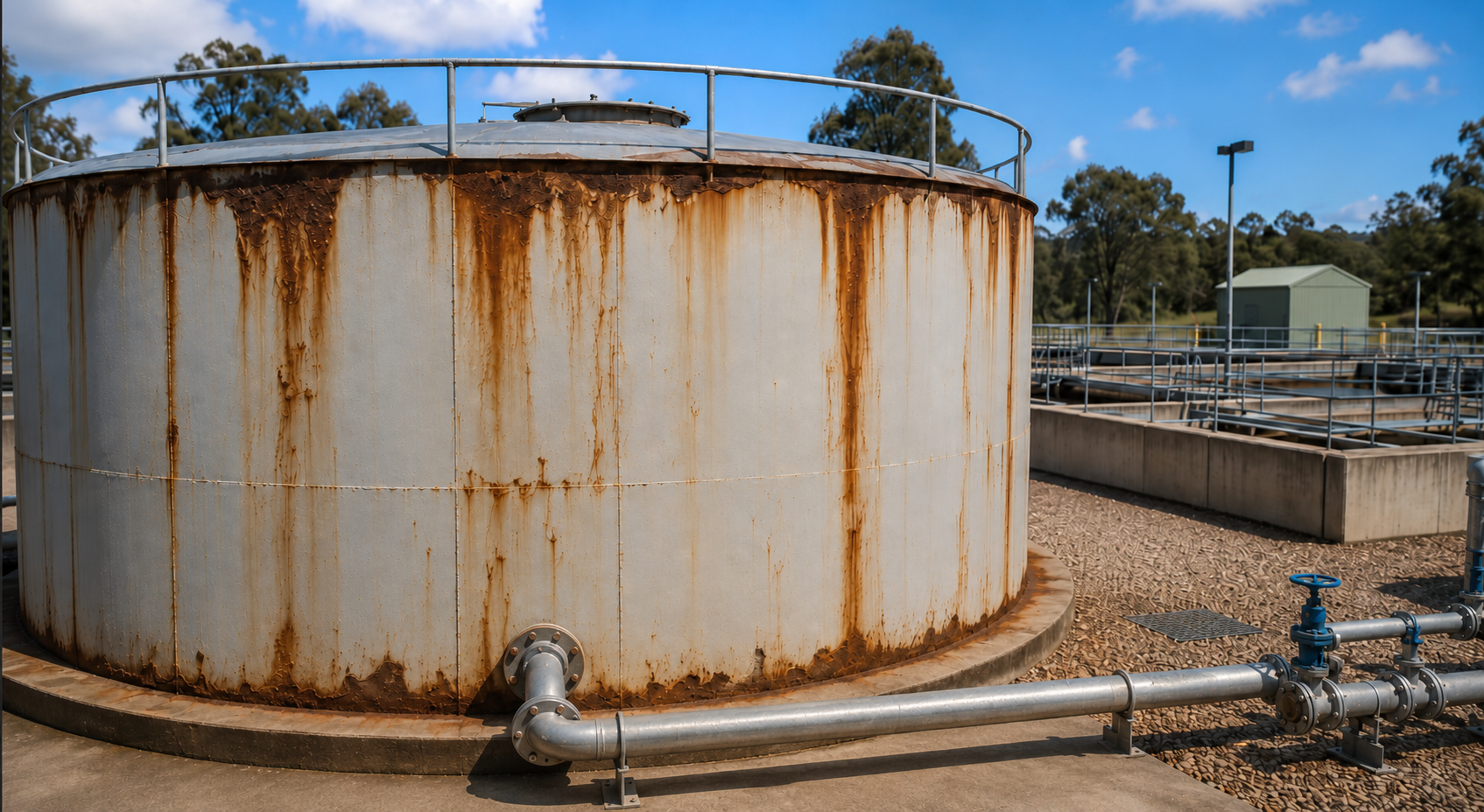
Sacrificial anode systems
A sacrificial anode is a more reactive metal — commonly zinc, magnesium or aluminium alloy — connected electrically to the tank steel. Because the anode metal is more electrochemically active than steel, it corrodes preferentially, sacrificing itself to protect the structure. No external power supply is needed; the system is driven purely by the natural potential difference between the anode metal and the steel.
Impressed current systems
An impressed current system uses an external DC power source (a rectifier) to drive protective current through relatively inert anodes to the structure. Because the current output is controlled electronically rather than fixed by anode chemistry, impressed current systems can deliver higher and more precisely tunable protection levels, and can protect larger or more complex structures than sacrificial anodes alone typically can.
Tank size and protection demand
Sacrificial anode systems suit smaller tanks and moderate protection demand well — they are simple, need no power supply, and are relatively low-maintenance to operate day to day. For large tanks, poorly coated structures, or high-conductivity water where protection current demand is significant, sacrificial anodes may not deliver enough current, and impressed current becomes the more practical option.
Power availability and monitoring commitment
Impressed current systems need a reliable power supply and rectifier maintenance, plus periodic potential monitoring to confirm the system is delivering adequate — but not excessive — protection current. Overprotection is a real risk with impressed current systems and can cause coating disbondment or hydrogen embrittlement in some materials, which is why professional design and monitoring matter more with this method. Sacrificial anode systems are largely self-regulating by comparison, at the cost of less flexibility and eventual anode replacement as the sacrificial metal is consumed.
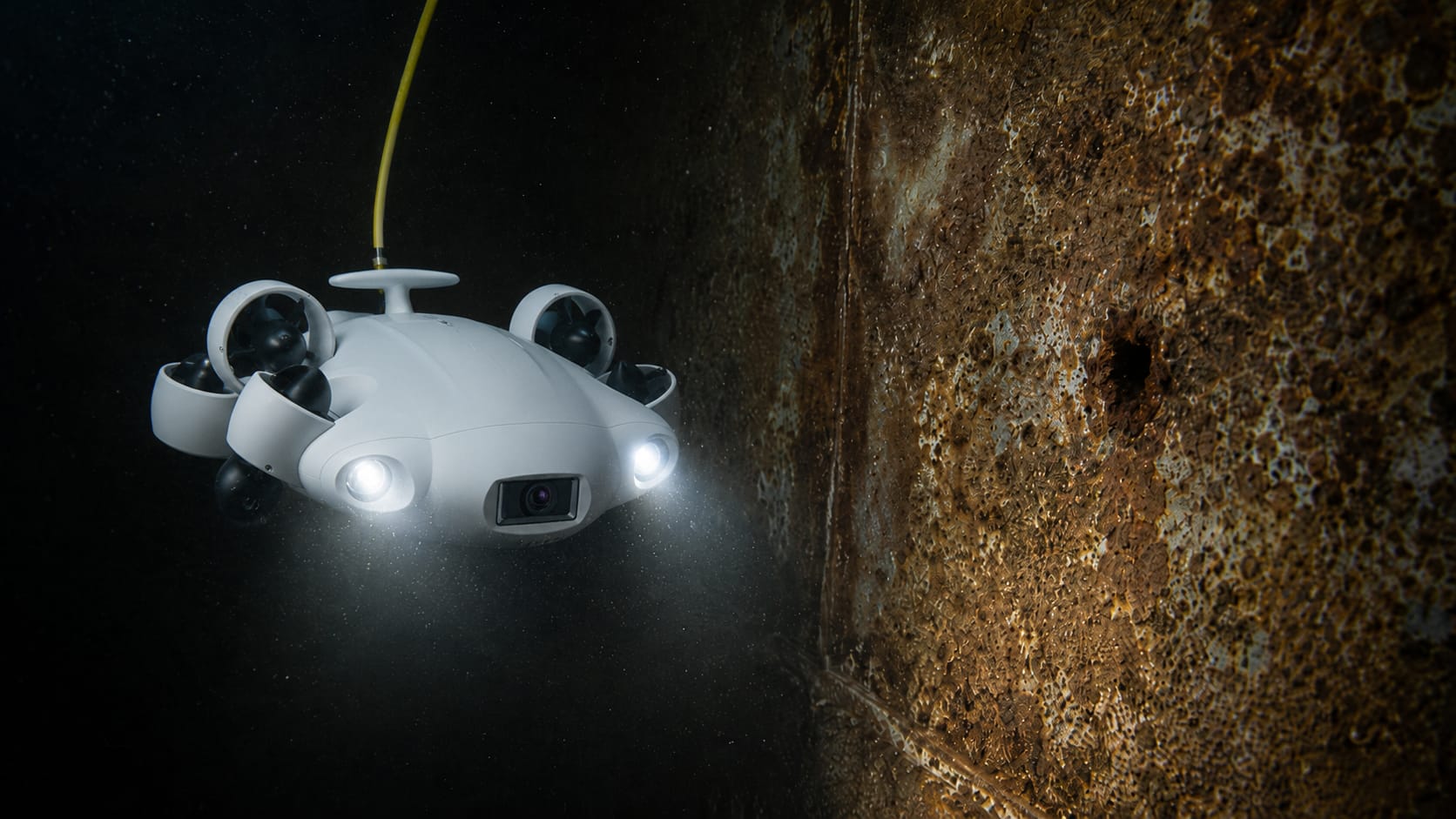
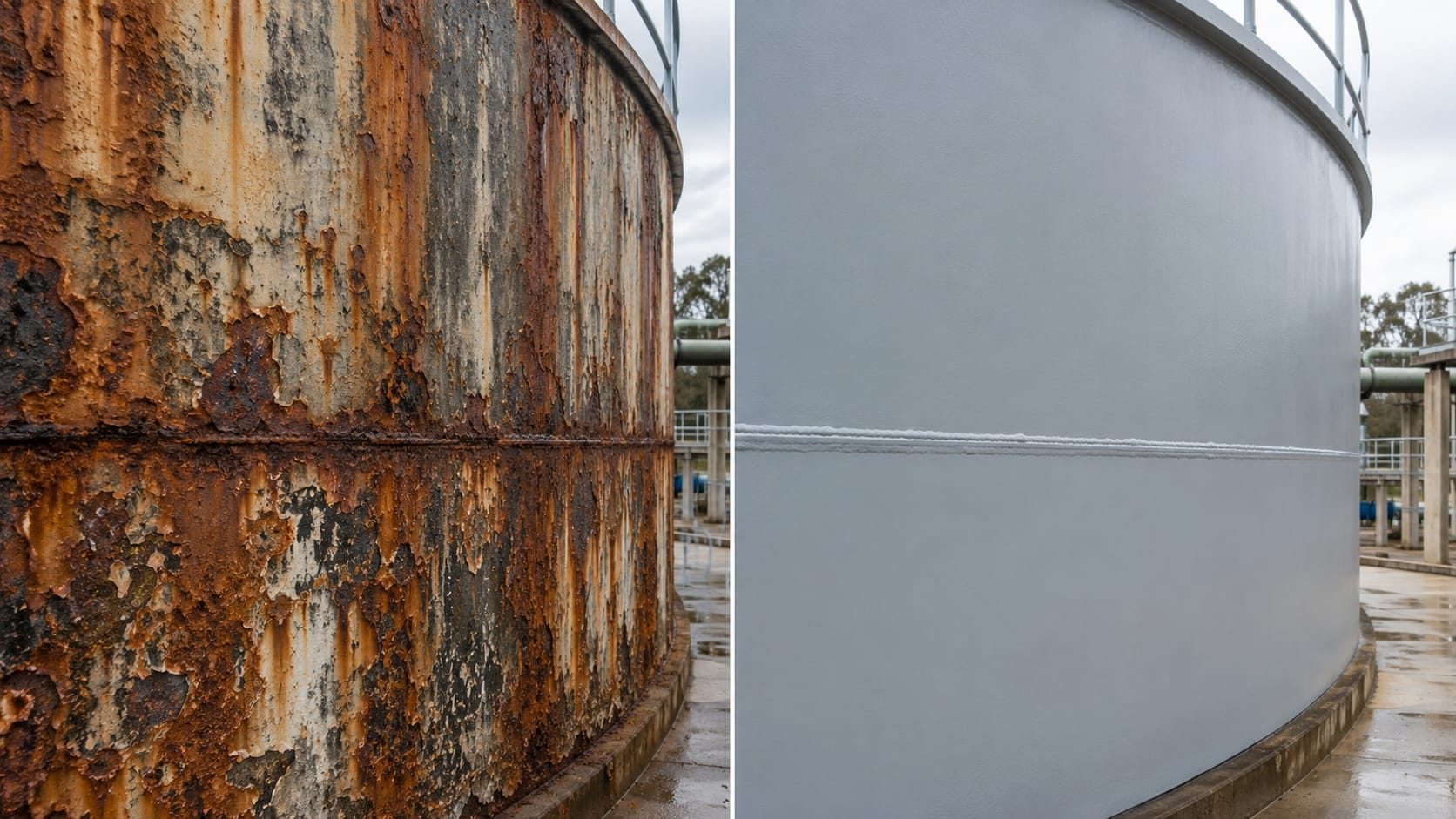
Cathodic protection is not a substitute for a good coating system — it is what protects the steel at the coating defects every real-world coating eventually develops.
| Factor | Sacrificial anode | Impressed current |
|---|---|---|
| Power supply required | No | Yes |
| Suits large or complex structures | Limited | Yes |
| Ongoing maintenance | Anode replacement over time | Rectifier and monitoring |
| Overprotection risk | Low | Requires monitoring to avoid |
Does a tank need cathodic protection if it already has a coating?
Coatings inevitably develop small defects over time from handling, wear or ageing. Cathodic protection is typically applied alongside a coating system to protect steel specifically at those defect points, extending the effective service life beyond what the coating alone would provide.
How do you know if a sacrificial anode system is still working?
Anode consumption should be checked periodically against design assumptions — a rapidly consumed anode may indicate higher-than-expected current demand, and a barely consumed anode can indicate poor electrical connection. Potential surveys are the more precise way to confirm the system is delivering adequate protection.
Can an impressed current system provide too much protection?
Yes. Overprotection is a genuine risk with impressed current systems and can cause coating disbondment or, in susceptible materials, hydrogen embrittlement. This is why impressed current systems need professional design and periodic monitoring rather than a fixed setting left unchecked.
Assessing corrosion protection options for a steel water tank? PC Water Infrastructure can recommend and specify the right cathodic protection approach.
Discuss Corrosion Protection