
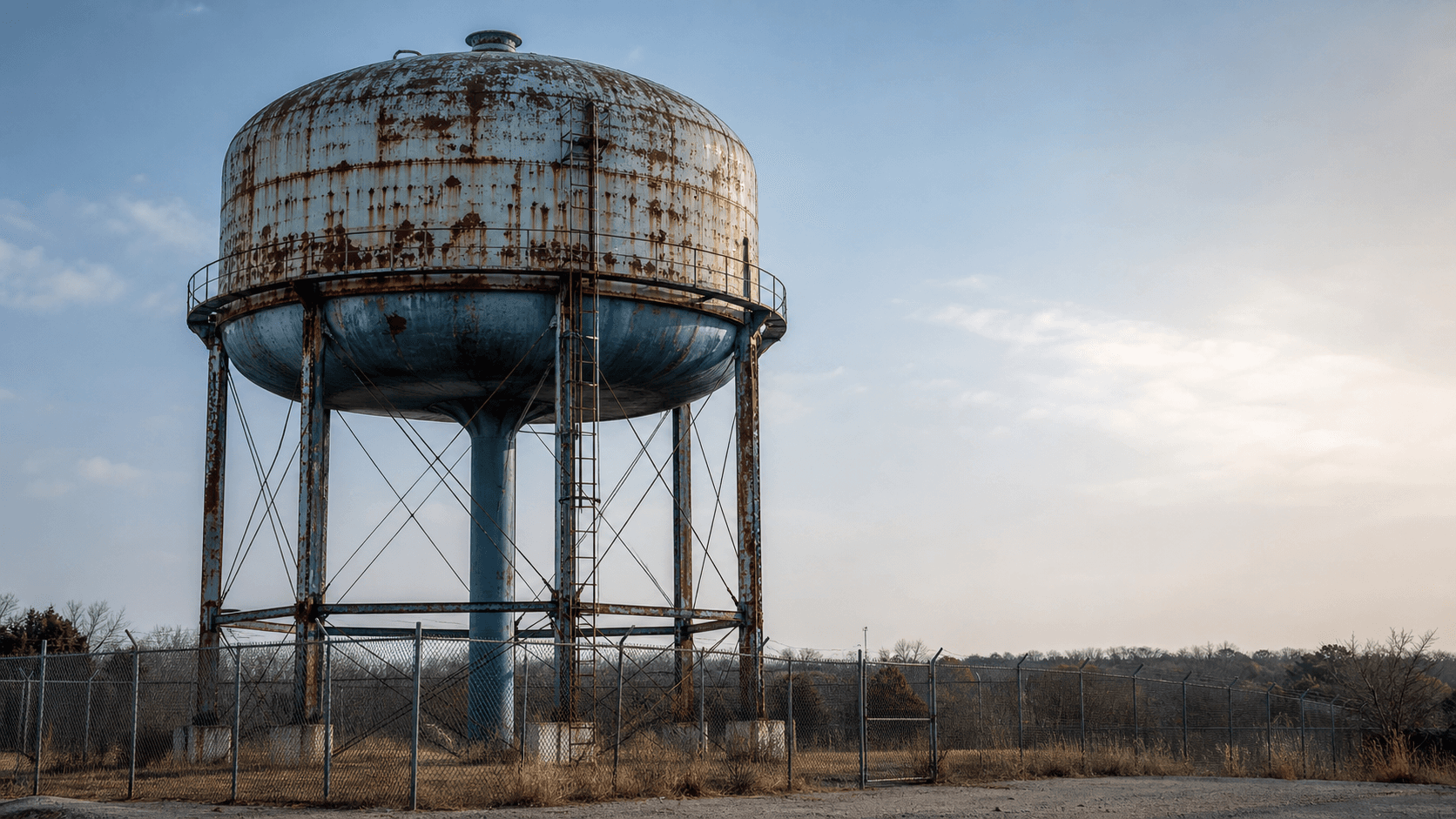
A commercial or rural property listing that mentions "existing water storage" is describing an asset, not just a feature — and like any other asset changing hands, its condition, compliance status and remaining service life are worth verifying before settlement, not discovered afterward.
Structural, electrical and building due diligence are routine parts of most property transactions. Water storage infrastructure is frequently overlooked in the same process, particularly where it is not the primary asset being purchased — a tank supporting a commercial building's fire compliance, or supplying a rural property, can be treated as incidental infrastructure rather than a distinct asset with its own condition and compliance profile worth checking.
Current condition and remaining service life
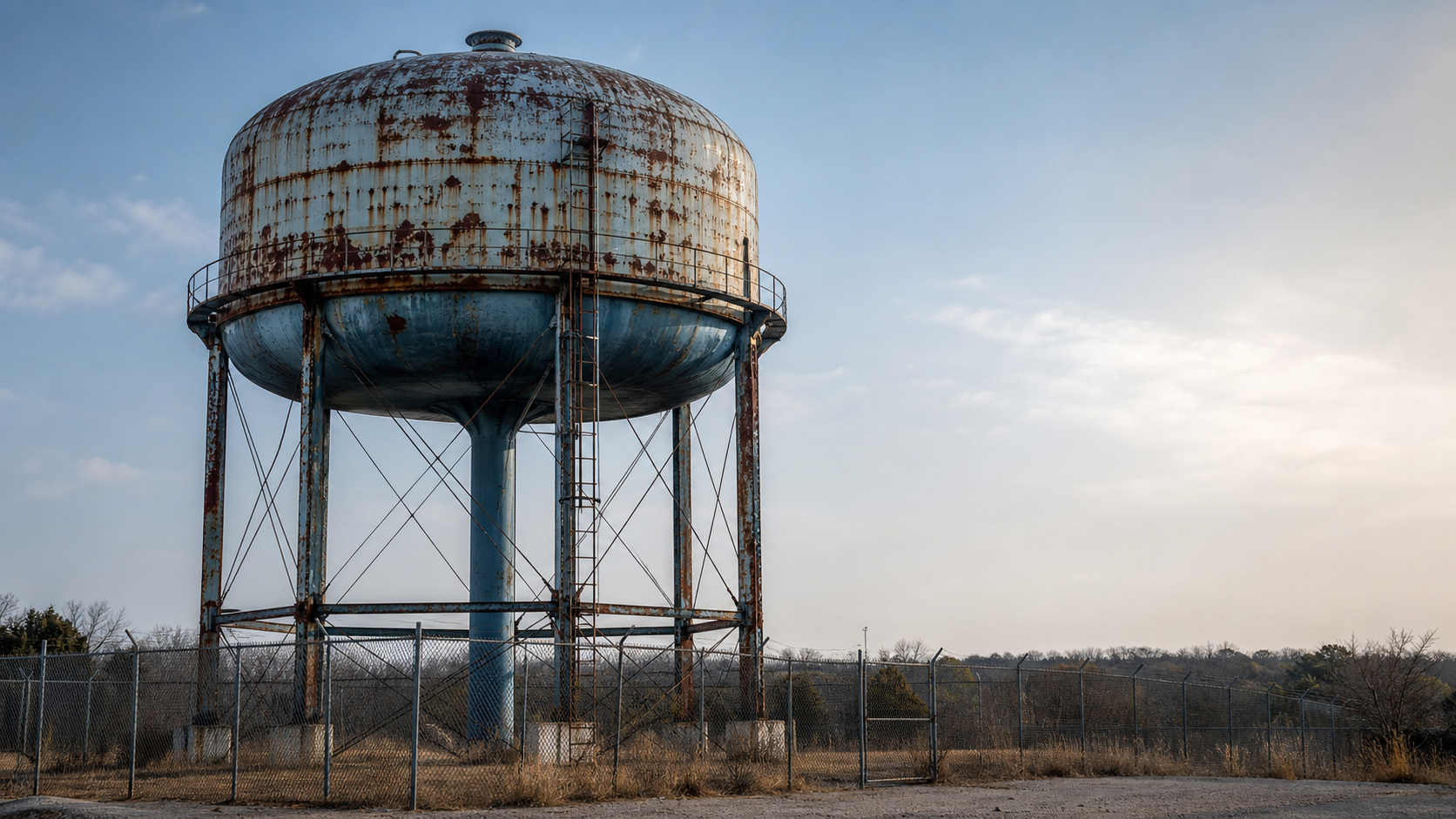
A visual and, where practical, more detailed condition inspection establishes the tank's actual state — corrosion, coating condition, structural integrity — rather than relying on the vendor's representation or the tank's apparent age alone. This directly informs whether near-term capital expenditure on repair, relining or replacement should be factored into the purchase decision.
Compliance status
Where the tank serves a fire compliance function, confirming it actually meets current AS2304 or AS1851 requirements — rather than assuming compliance because the building has an occupancy certificate — protects against inheriting a compliance gap along with the property.
Maintenance and documentation history
Requesting the tank's maintenance records, inspection history and any warranty documentation from the vendor reveals whether the asset has been properly cared for, and provides a baseline against which any future condition changes can be measured — a gap in this history is itself informative, even where the tank's current condition appears sound.
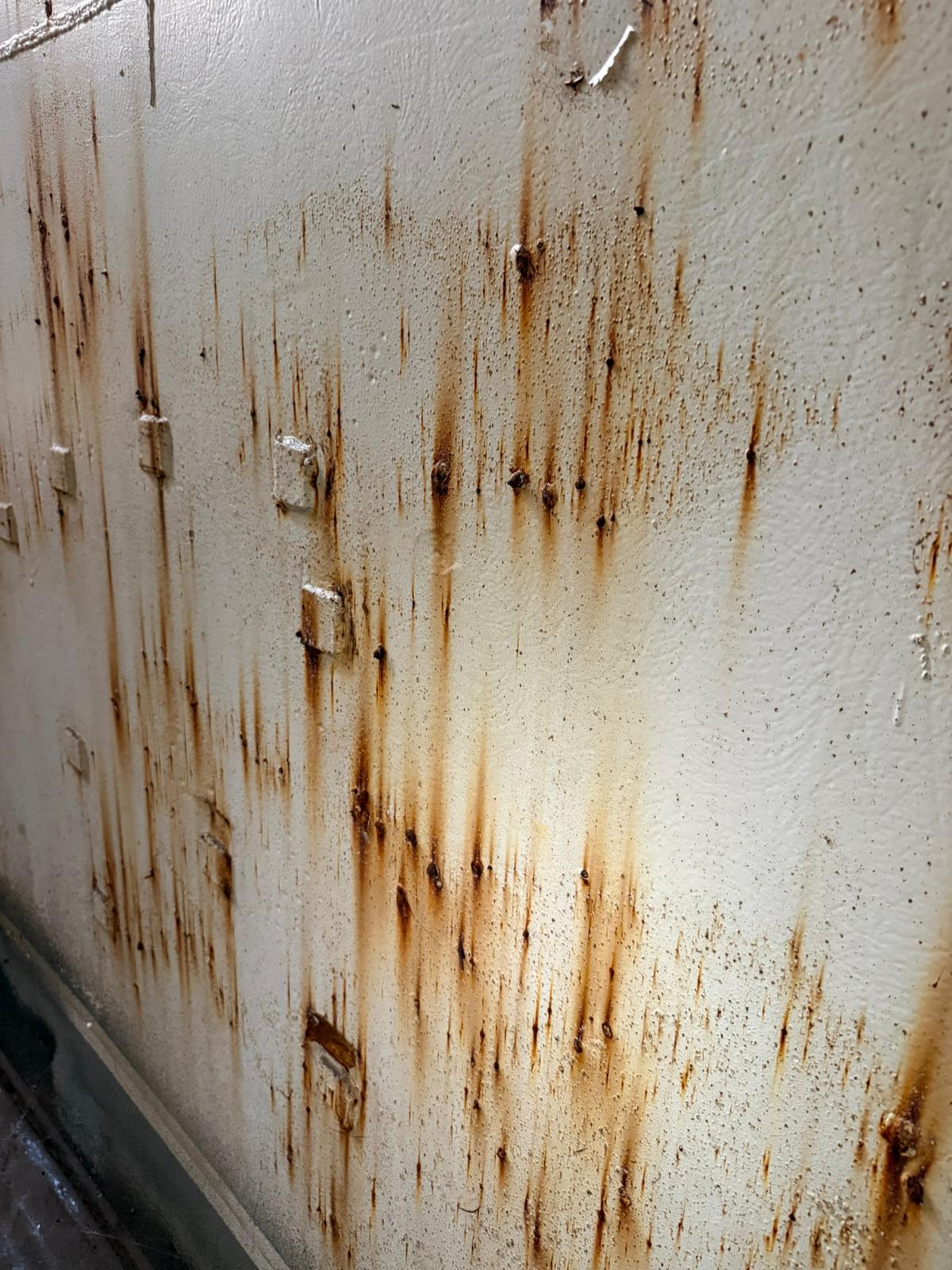
A water tank does not stop being an asset with its own risk profile just because it is not the headline reason for the purchase. Checking its condition and compliance before settlement is far cheaper than discovering a problem afterward.
| Check | Why it matters |
|---|---|
| Current condition inspection, not just visual review | Reveals actual state independent of the vendor's representation |
| Compliance status against relevant standards (e.g. AS2304, AS1851) | Confirms the tank is not carrying an inherited compliance gap |
| Maintenance and inspection history from the vendor | Establishes whether the asset has been properly cared for |
| Estimated remaining service life | Informs near-term capital expenditure planning after purchase |
| Warranty status and transferability | Confirms whether any existing warranty cover survives the sale |
Is a water tank condition check a standard part of commercial property due diligence?
It is not always included by default, particularly when the tank is incidental infrastructure rather than the primary asset, but it is a worthwhile addition to due diligence for any property where water storage supports fire compliance, operations, or represents a meaningful potential repair or replacement cost.
What if the vendor cannot provide maintenance records for the tank?
A missing maintenance history is itself worth factoring into the purchase decision — it means the tank's true condition history is unknown, which increases the value of an independent condition inspection before settlement to establish a reliable current baseline.
Can a tank warranty transfer to a new property owner?
This depends on the specific warranty terms — some warranties are transferable with notice to the provider, others are tied to the original purchaser. This should be confirmed directly with the warranty provider as part of due diligence, rather than assumed either way.
Considering a property purchase with an existing water tank? An independent condition and compliance check protects your position before settlement.
Request a pre-purchase tank inspection