

Rockhampton sits on the Fitzroy River floodplain, and the city's flood history is well documented — which makes water tank siting, foundation design and post-flood inspection genuinely different considerations here than on a site with no realistic flood exposure.
Foundation design for a flood-prone floodplain
A tank foundation on the Fitzroy floodplain needs to account for the possibility of ground saturation and, in a significant flood event, scour around the footing — a different design consideration to a site with stable, well-drained ground year-round. Foundation and drainage design that ignores this risk can leave a tank vulnerable to settlement or undermining exactly when a major flood tests it.
Contamination risk during and after flood events
Floodwater can introduce contamination into a tank through overflow paths, damaged seals, or inundation of external fittings — meaning a tank on a flood-exposed site benefits from post-event inspection as standard practice, not an optional extra, before it is assumed safe to continue supplying potable water.

For a property in Rockhampton or elsewhere on the Fitzroy floodplain, this generally means confirming the tank's foundation and siting were assessed against realistic flood levels for that specific location, checking drainage design actively directs floodwater away from the footing rather than allowing it to pool, and building a post-flood inspection into the property's standard response — checking seals, fittings, and water quality before assuming the tank is unaffected.
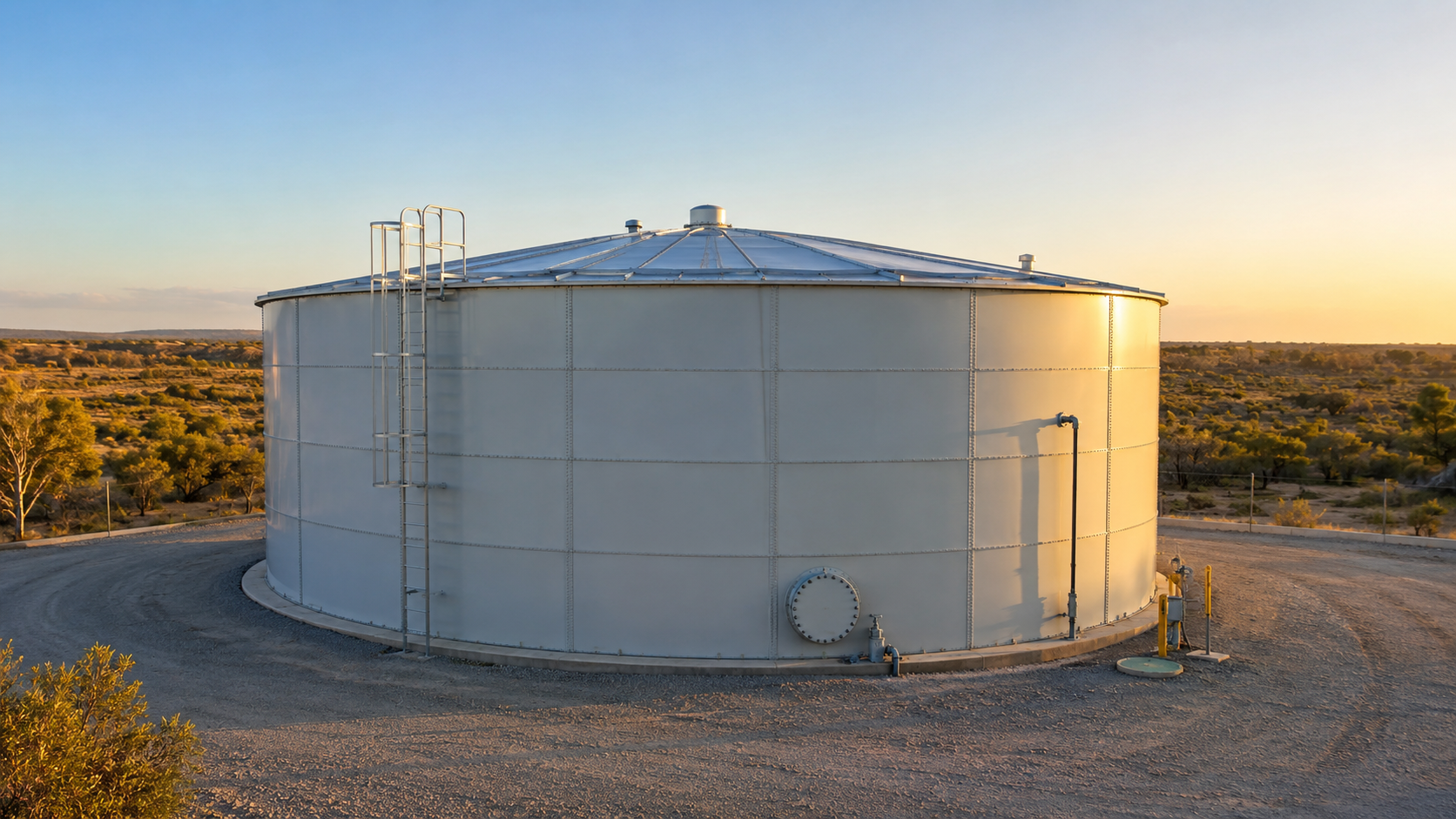
A flood-prone site does not mean a tank cannot be safely installed and operated there — it means the foundation, drainage and post-event inspection plan all need to explicitly account for a risk that a dry, stable site simply does not carry.
| Check | Why it matters locally |
|---|---|
| Foundation design assessed against realistic local flood levels | Standard foundation design may not account for saturation or scour risk |
| Site drainage directing floodwater away from the tank footing | Poor drainage compounds foundation risk during a flood event |
| Post-flood inspection as standard property procedure | Confirms seals, fittings and water quality before resuming normal supply |
| Overflow and vent screening intact after flood exposure | Floodwater and debris can compromise these fittings without obvious external damage |
Does a tank on the Fitzroy floodplain need a different foundation to a standard site?
It should be assessed against realistic local flood levels and the specific site's exposure to saturation and scour risk, which can result in a different foundation and drainage specification compared to a site with no meaningful flood exposure.
Should a tank be inspected after every flood event, even a minor one?
For any flood event that affects the tank site — inundation, debris, or visible impact on fittings — a post-event inspection is a sound precaution, since contamination pathways through overflow, seals or fittings are not always visible from the outside.
Can an existing tank on a flood-prone site be assessed for adequacy after the fact?
Yes — a structural and siting review can confirm whether an existing tank's foundation and drainage arrangement are adequate for the site's actual flood risk, and identify remedial works if a gap is found.
Managing a water tank on the Fitzroy floodplain or elsewhere in the Rockhampton region? Foundation, drainage and post-flood inspection all deserve specific attention here.
Discuss your Rockhampton region project