
Few Australian cities swing between water extremes as sharply as Townsville — a monsoon wet season capable of filling Ross River Dam rapidly, followed by long dry stretches, with cyclone risk sitting over the entire cycle. Water storage infrastructure here has to be designed for both ends of that swing, not just the average.
Cyclone-rated structural design
Tanks installed in Townsville and the broader North Queensland cyclone region need wind loading design that reflects the region's actual cyclone hazard classification — a genuinely different structural specification to a temperate-climate site, affecting anchorage, roof design and freeboard allowance for storm surge and wind-driven water movement.
Dry-season demand planning
The extended dry season places real demand pressure on stored water, whether that storage is a large-scale reservoir like Ross River Dam or property-level tank storage supplementing the network. Sizing and drawdown planning need to reflect the region's genuine dry-season duration, not an average annual rainfall figure that masks the seasonal extremes.

For commercial, industrial and defence-adjacent sites around Townsville, tank specification needs to account for cyclone wind loading, storm surge and heavy monsoonal inflow all at once — freeboard and overflow sizing calculated against a genuine North Queensland storm event, anchorage checked against the region's wind classification, and a maintenance schedule that accounts for the accelerated wear tropical humidity and heat can place on coatings and fittings.
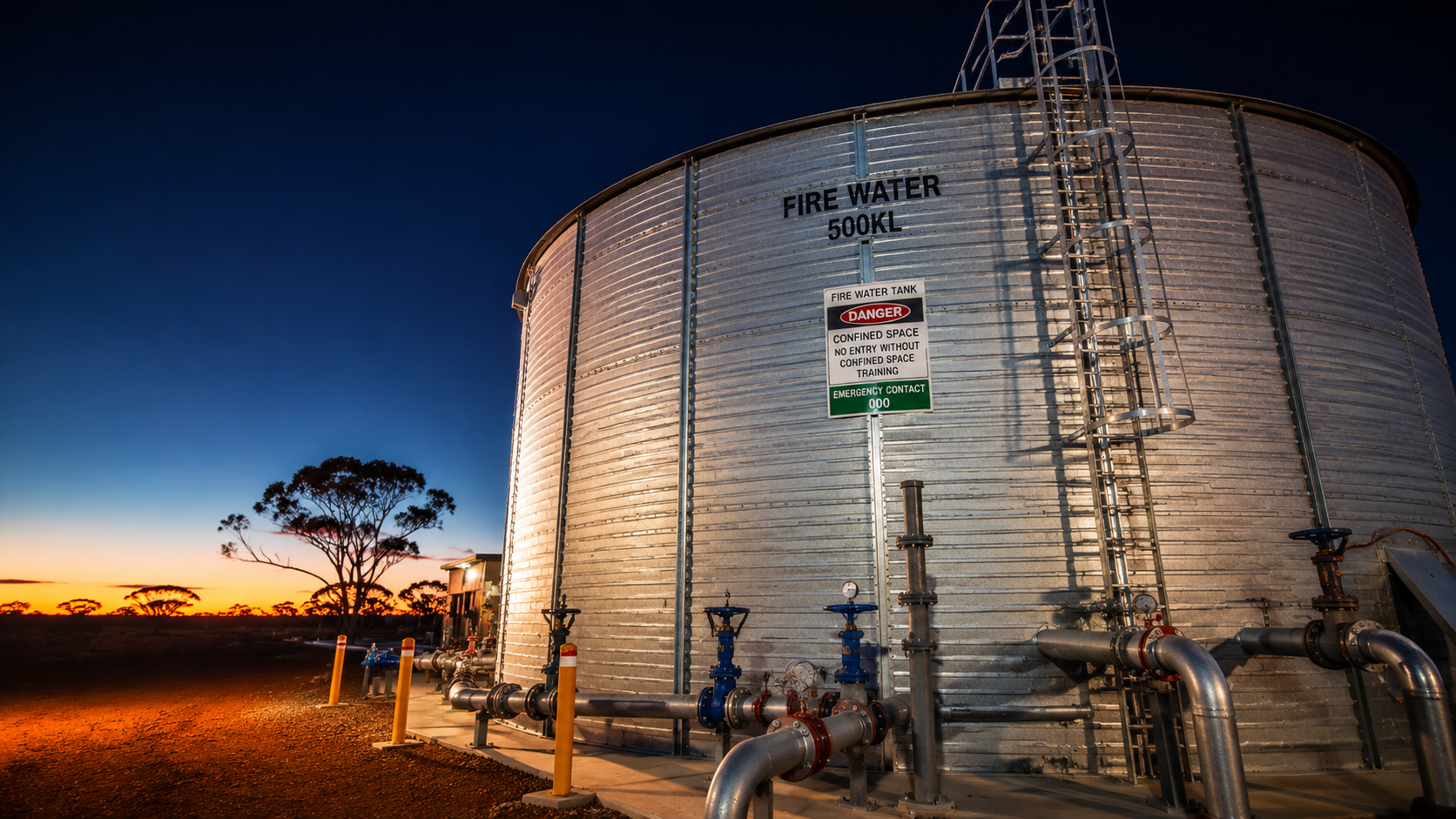
A tank designed only for Townsville's average conditions is designed for a climate the city does not actually have. The real design brief is the full swing — cyclone-season extremes and dry-season demand — not the number in between.
| Check | Why it matters locally |
|---|---|
| Anchorage and structural design against the applicable cyclone wind classification | Standard temperate-climate design may not meet the actual regional wind hazard |
| Freeboard and overflow sizing for monsoon inflow events | The wet season can deliver rapid, significant inflow requiring proper overflow capacity |
| Dry-season demand and drawdown planning | Sizing should reflect genuine seasonal extremes, not an averaged figure |
| Coating and fitting condition under tropical humidity and heat | Accelerated wear is common and worth checking on a more frequent inspection cycle |
Do water tanks in Townsville need a different structural specification to southern Australian cities?
Yes — cyclone wind loading and storm surge considerations are a genuine structural design factor for the region, affecting anchorage, roof design and freeboard in ways a temperate-climate specification would not account for.
Does tropical humidity affect how often a tank should be inspected?
It can accelerate coating and fitting wear compared to a drier or cooler climate, which is a reasonable basis for considering a more frequent inspection cycle than a standard default, particularly for external coatings and exposed fittings.
Should tank storage be sized around Townsville's average rainfall?
Sizing based on an averaged annual figure risks understating the real dry-season demand pressure, since Townsville's rainfall pattern is highly seasonal. Storage should be sized against realistic dry-period duration for the specific site.
Specifying or maintaining water storage in Townsville or North Queensland? Cyclone-region design and dry-season resilience both need to be built into the specification.
Discuss your Townsville region project